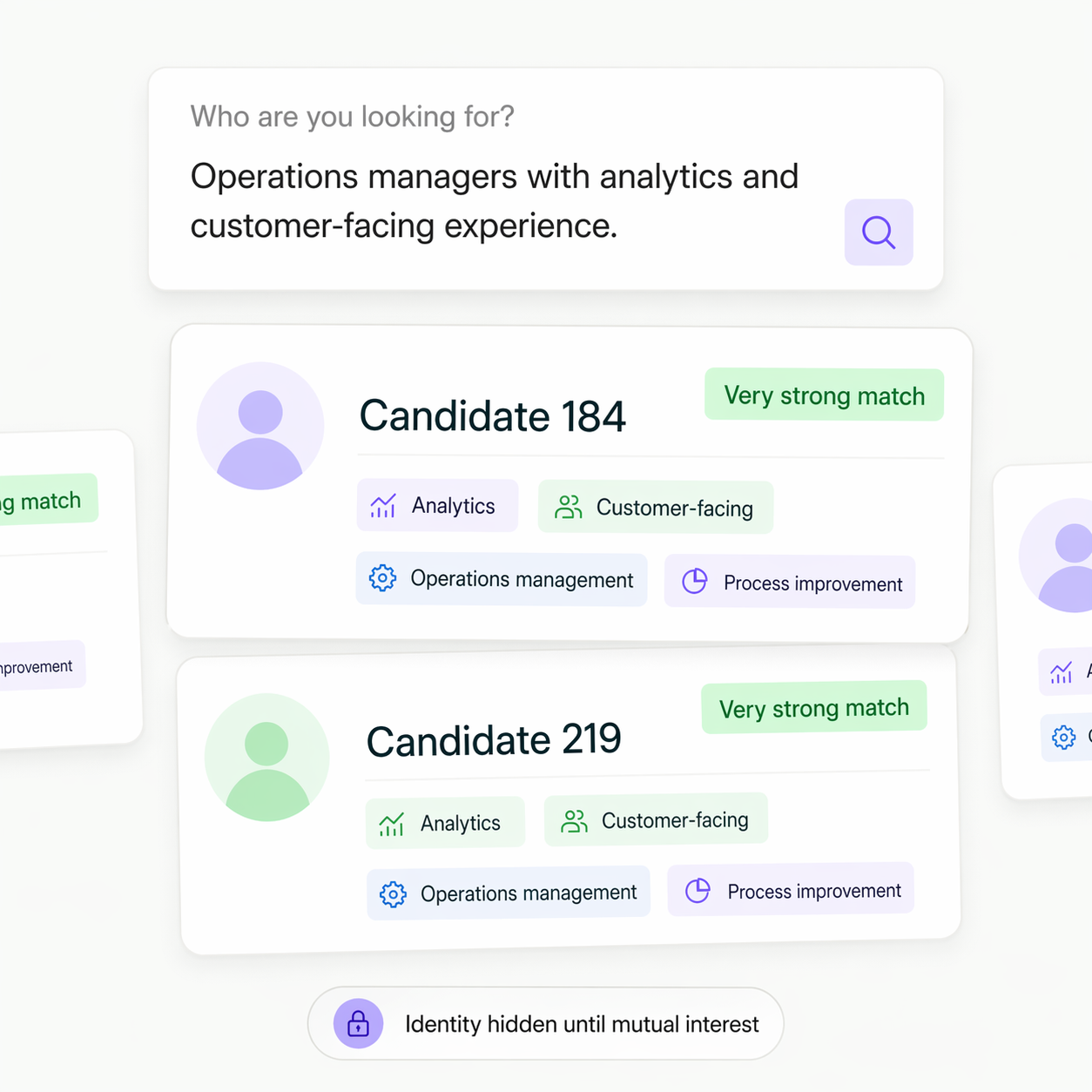
By default, names, photos, schools, previous employers, addresses, and dates are suppressed during the first review pass. Reviewers see skills, structured evidence, and role-fit scores. Admins can configure which fields are hidden based on organizational policy.
Product: Name-Blind Matching
Review capability before identity shapes the story.
Name-Blind Matching gives talent teams a cleaner first pass: skills, role fit, and structured evidence before names, schools, employers, or background signals pull the review off course.
How it works
From integration to outcome
Start With the Skills Map
Anchor review around the capabilities and evidence that matter for the role.
Hide Non-Essential Signals
Reduce early exposure to identity signals that can pull attention away from capability.
Reveal at the Right Stage
Advance candidates with a clearer record of role fit before identity enters the workflow.
Strip the noise from early review.
Skills-first candidate evaluation that reduces noise and improves consistency.
The Problem
Early review can become a proxy contest before capability gets a fair read.
In the first pass of screening, names, schools, past employers, formatting, tenure, and background signals can distract from the question that matters: can this person do the work? The process can feel fast while quietly becoming inconsistent.
Learn more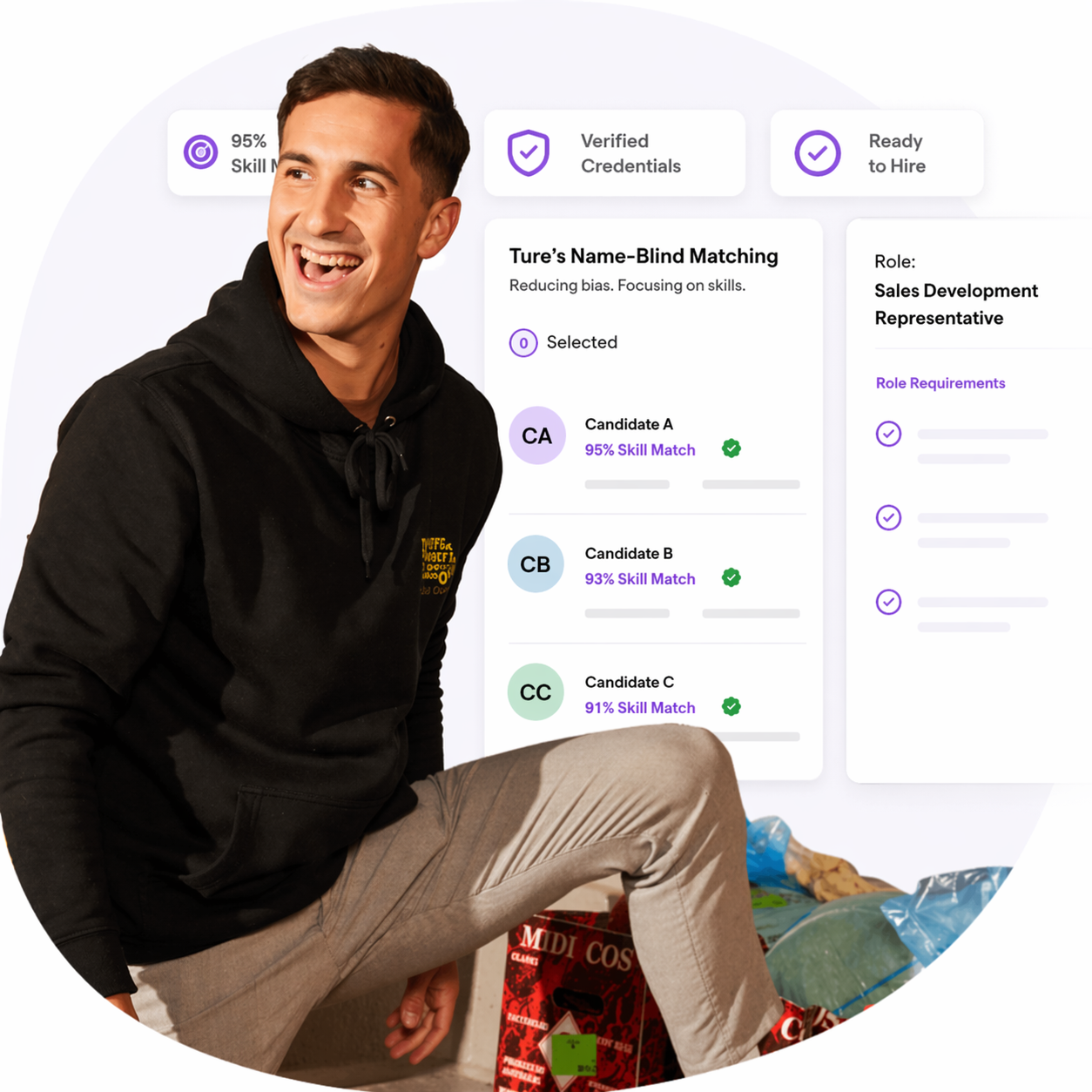
The Solution
Name-Blind Matching creates a cleaner starting point for judgment.
Teams begin with structured capability and role relevance, then reveal identity at the right stage. Recruiters still use judgment, but they apply it to a stronger, more consistent foundation.
Talk to SalesReduced Identity Noise
Help recruiters focus attention on job-relevant information and create a more defensible evaluation process.
Skills-First Candidate Comparison
Make early-stage screening more consistent and reduce reliance on resume shorthand.
Better Reviewer Alignment
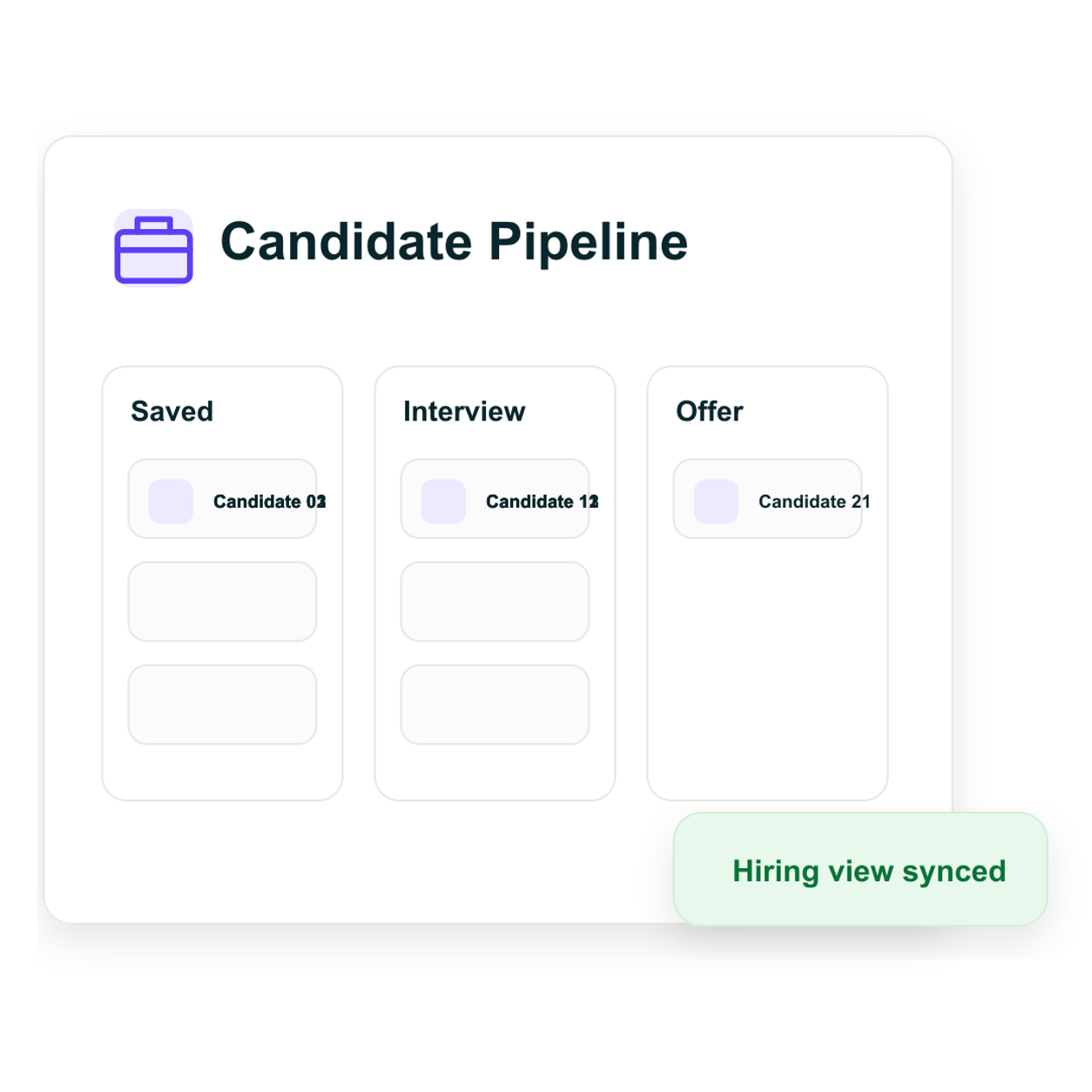
Improve consistency across reviewers and reduce subjective drift in candidate evaluation.
“Name-blind search changed how I shortlist. I stopped pattern-matching on names and schools and started actually reading the skills profile. My last two hires came from candidates I would have scrolled past.”
Ben Olusola, Engineering Hiring Manager, Tidepool Analytics
Name-blind review, explained.
Reduce bias in early candidate review without adding process.
Give your team a cleaner, more structured way to evaluate candidates before bias and resume noise shape the process.