Feature: SkillsID Profile
Turn experience into a profile the whole platform can use.
SkillsID turns job titles, resumes, and lived experience into a structured capability profile — mapped against 32,000 skills and 58,000 occupations — that follows the participant from transition support to role matching and talent review.
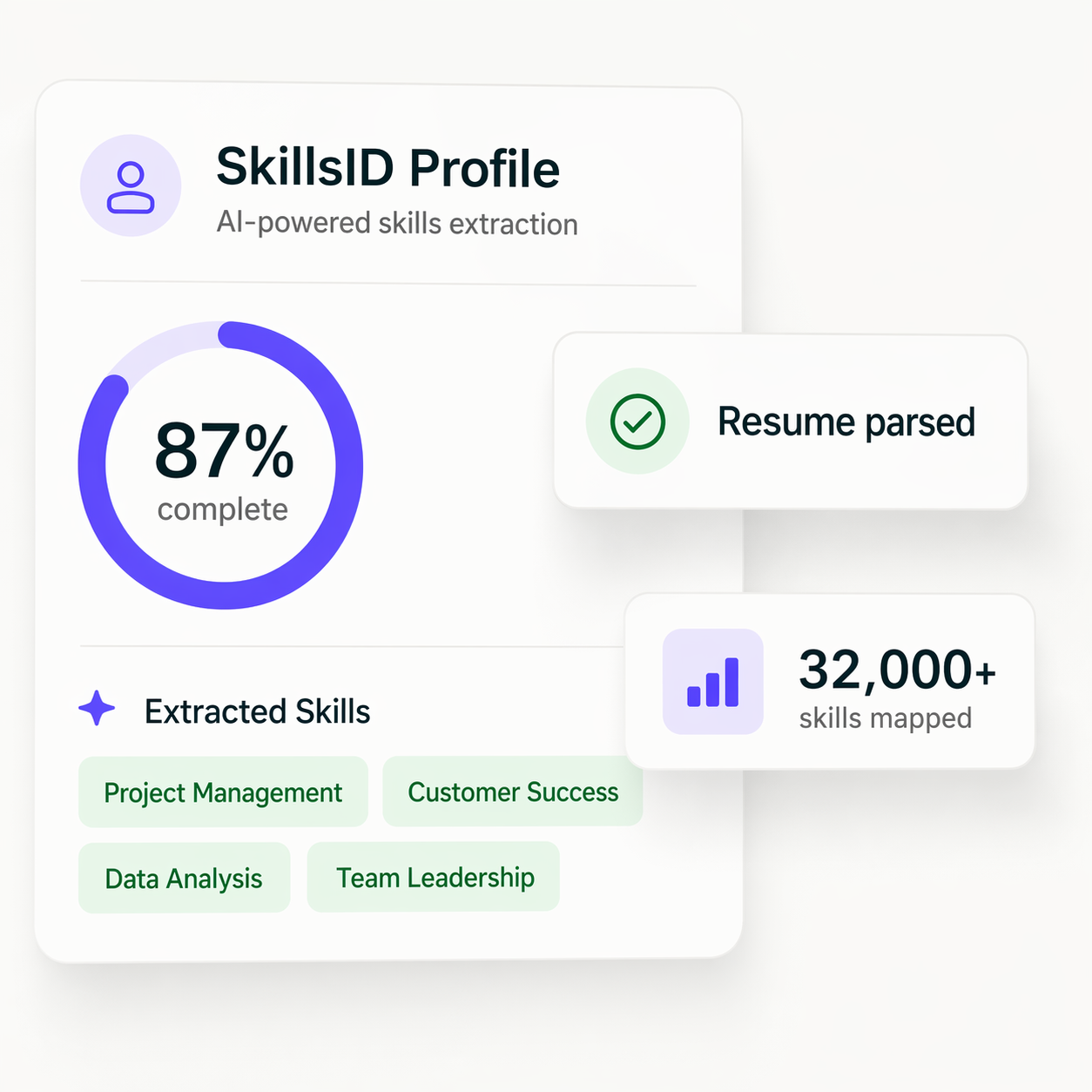
How it works
From integration to outcome
Capture the Background
Start with a resume, work history, or guided intake to understand experience in context.
Translate It Into Skills
Map that background into normalized skills, strengths, and adjacent role possibilities.
Use It Everywhere
Carry the same profile into coaching, job discovery, internal mobility, and skills-first review.
One profile, every workflow.
A shared capability foundation that connects transition, matching, and evaluation workflows.
The Problem
A resume can describe history without making capability visible.
Job titles, company names, and resume phrasing rarely create a consistent picture of what someone can actually do. Employees struggle to see transferable options, coaches reinterpret background manually, and hiring teams compare people through uneven signals.
Learn more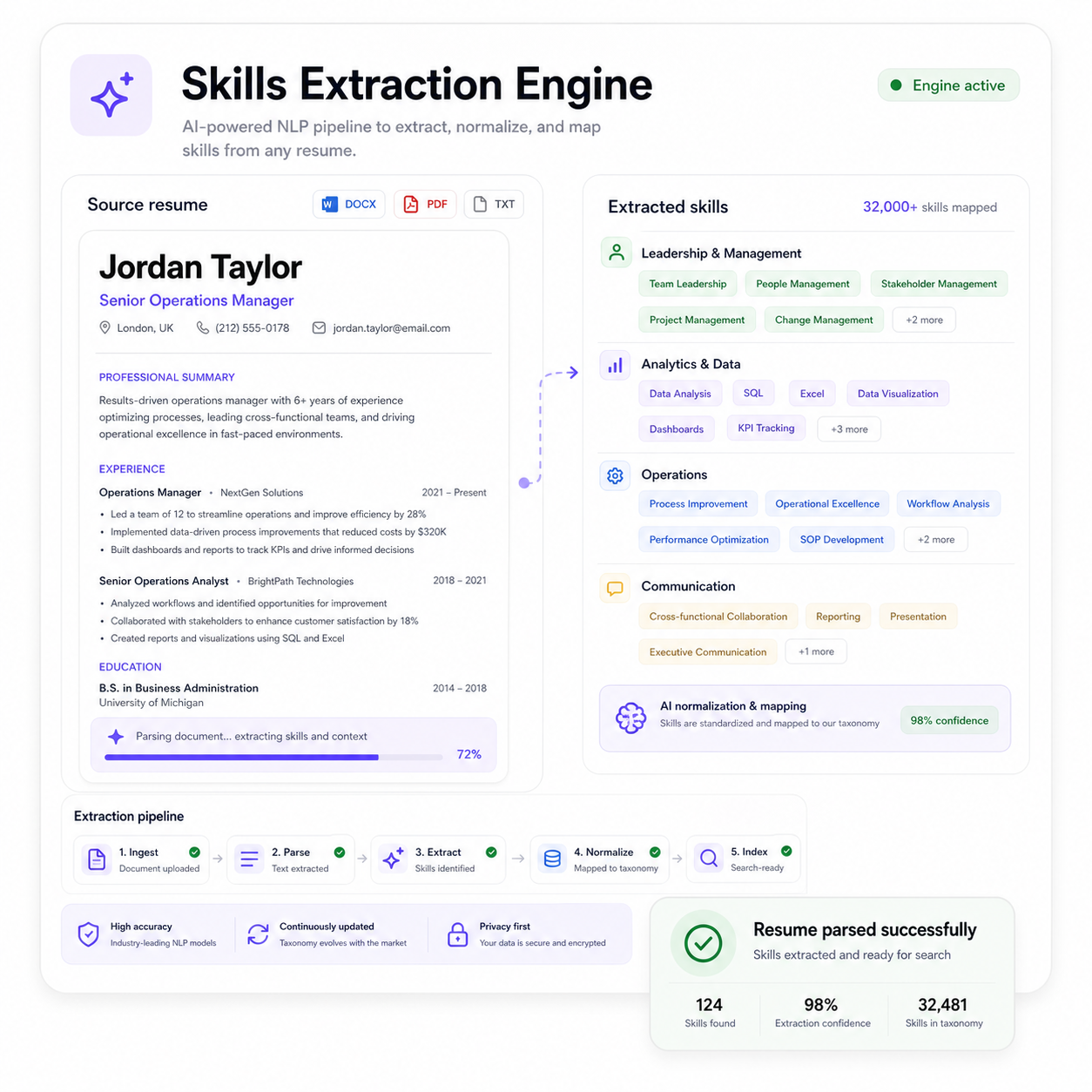
The Solution
SkillsID gives every workflow the same capability foundation.
Instead of treating the resume as the only source of truth, SkillsID translates experience into a skills-based profile that powers transition support, coaching, role recommendations, and candidate evaluation.
Talk to SalesStandardized Capability View
Reduce inconsistency in how participants and candidates are interpreted across the program.
Better Matching Foundation
Improve the quality of matching and make next-step support more targeted.
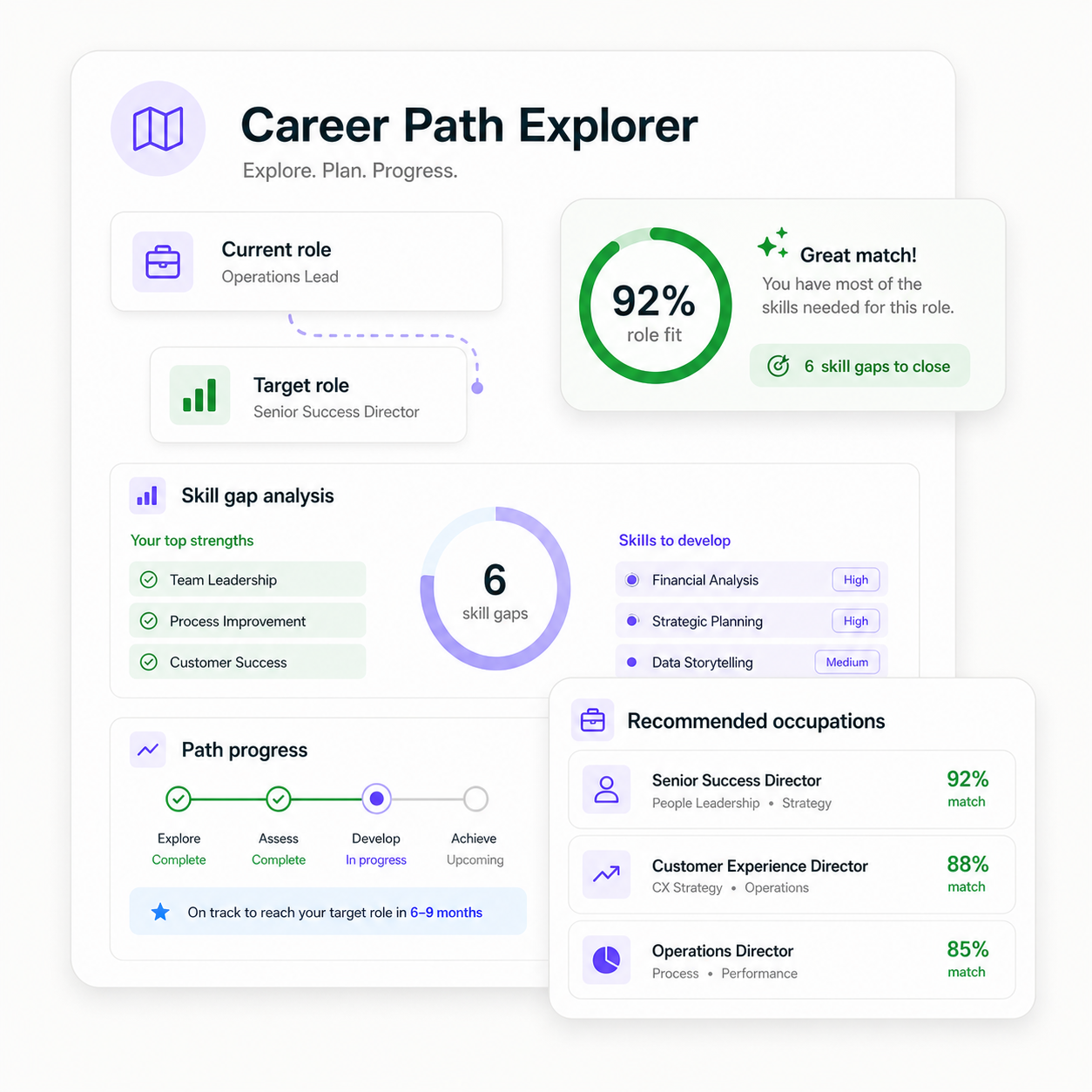
Cross-Platform Consistency
Create a more connected system instead of separate tools using different signals and definitions.
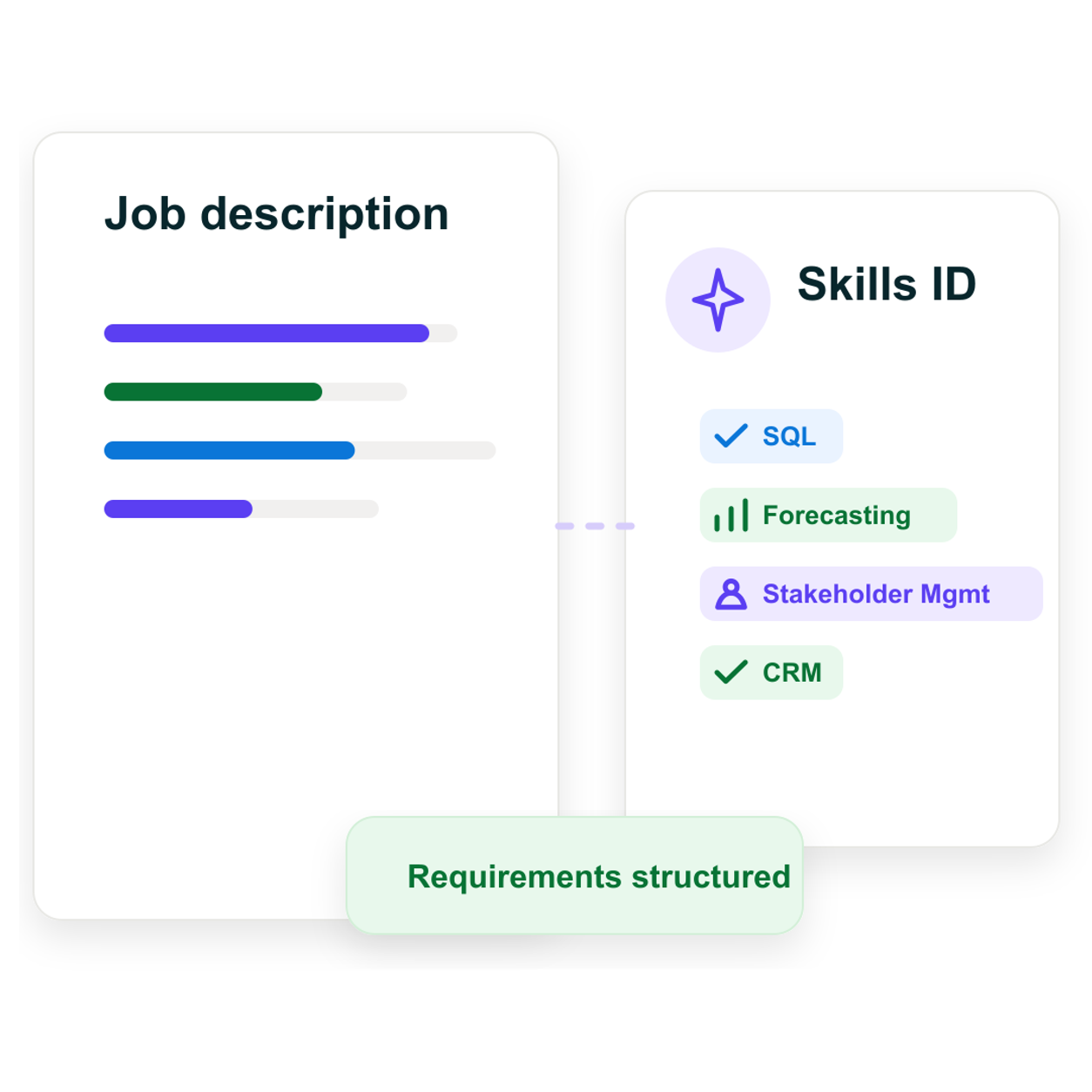
“I spent 22 years on a plant floor and didn't think I had 'skills' in the way the job boards kept asking for. Ture pulled 40 skills out of my resume that I didn't know how to name.”
Cory Tremblay, Transitioning Employee, Previously at Boreal Heavy Industries
FAQ
What the SkillsID Profile actually does.
A SkillsID profile is a structured capability map built from a person's resume, work history, and lived experience. It maps their skills against a taxonomy of 32,000 skills and 58,000 occupations — showing not just what they have done, but what they can do and which adjacent roles are realistic next steps.
The employee owns it. SkillsID is part of the employee's private workspace. When a transition program ends, the profile stays with the individual. Employers see aggregated, de-identified skills data at the program level, not individual profiles.
Most participants get a working SkillsID within minutes of uploading a resume or completing a guided intake. Ture AI helps refine the profile over time as the participant adds experience, completes courses, or receives coaching feedback.
Yes. The same profile powers job discovery, internal role matching, name-blind candidate review, and talent pipeline evaluation. That is the point — one skills foundation connects transition, redeployment, and hiring instead of forcing each system to interpret capability differently.
Ture AI handles ambiguous or non-standard job titles by inferring transferable skills from context. Participants can review and edit their profile at any time. The system improves as more people in similar roles refine their profiles.
Make capability easier to understand across every workflow that touches a participant.
Give your team a more structured way to interpret experience, improve matching, and support people through transition with greater consistency.